

Trump’s collapsing Iran strategy is exposing a dangerous mix of threats, ego, and global instability
Ceasefire on Paper, Chaos at Sea.

Small Bites is a reader-supported publication. To receive new posts and support my work, consider becoming a paid subscriber.
Hey Small Biters,
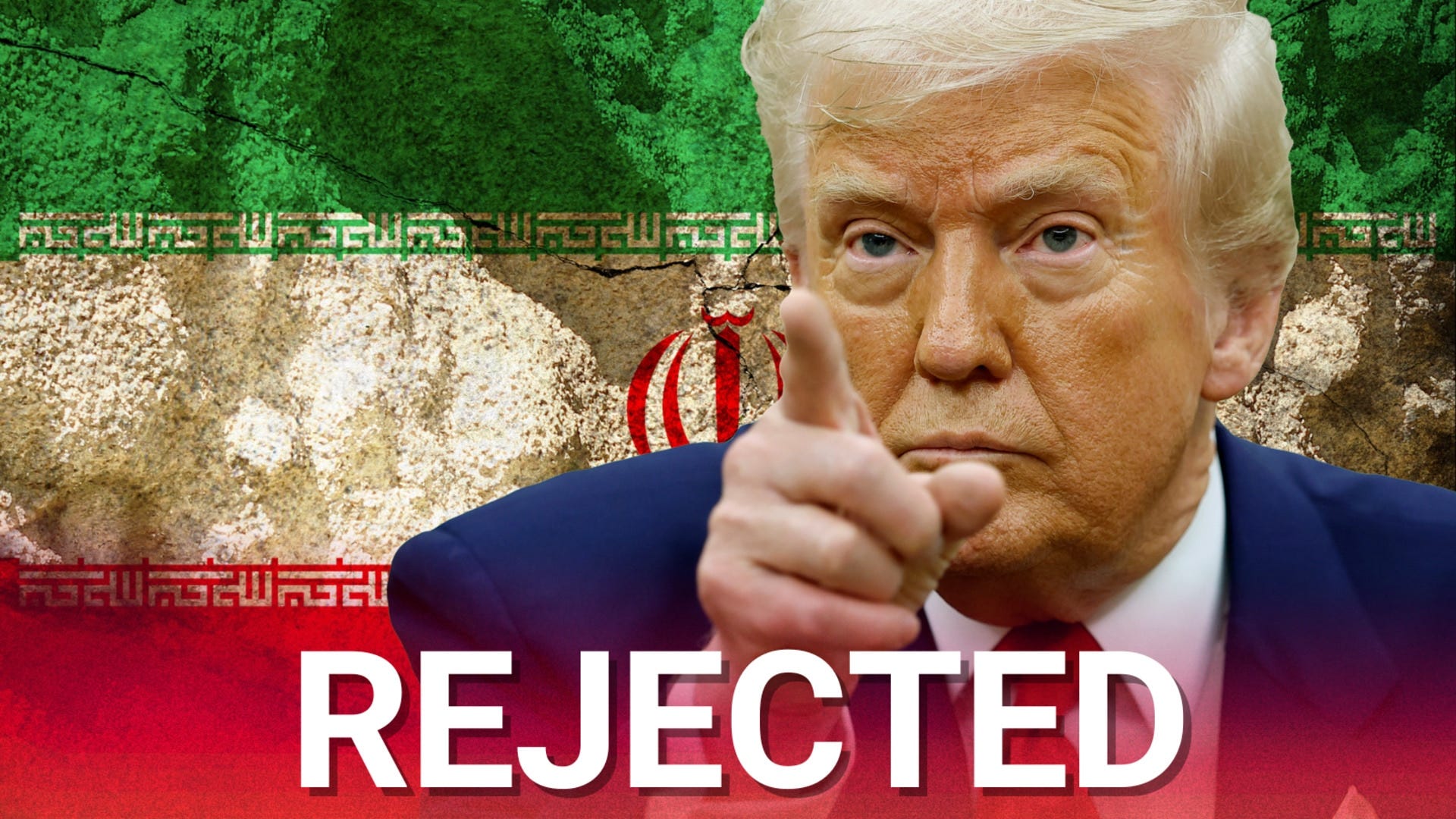
Donald Trump declared Iran’s latest response to a proposed peace framework “totally unacceptable” this week, once again proving that the White House is conducting diplomacy like a televised shouting match rather than a serious effort to prevent a wider regional catastrophe.
The ceasefire that was supposed to calm the Middle East now appears increasingly fragile, unstable, and dangerously temporary. Drone strikes rattled Gulf nations. Israel warned the war was “not over.” Iran continued signaling resistance. Oil markets remained nervous. Global shipping routes stayed under pressure.
Meanwhile, Trump kept posting threats online like a man trying to negotiate with a flamethrower in one hand and a camera crew in the other. Iran’s counter-proposal reportedly demanded the lifting of US sanctions, an end to the naval blockade around the Strait of Hormuz, guarantees against future attacks, and a halt to the war after an initial agreement was signed. Tehran also pushed back against sweeping American demands surrounding uranium enrichment and dismantling nuclear infrastructure.
Washington wanted surrender packaged as diplomacy. Iran answered with conditions that acknowledged reality. The original US proposal reportedly contained a 14-point framework centered around reopening the Strait of Hormuz and creating long-term nuclear restrictions on Iran. American officials wanted Tehran to freeze enrichment for up to twenty years, export highly enriched uranium overseas, and dismantle portions of its nuclear infrastructure.
That was never going to be accepted cleanly. Even analysts supportive of tougher pressure on Iran admitted privately that no government in Tehran could politically survive agreeing to total nuclear dismantlement under military threats from Washington and Tel Aviv.
Trump reacted exactly as expected. “I don’t like it – totally unacceptable,” he declared after reading Iran’s response, turning another highly volatile geopolitical moment into a performance of personal outrage. His administration keeps treating diplomacy like a loyalty test.
Every disagreement becomes betrayal. Every compromise becomes weakness. Every negotiation becomes theater designed for domestic political consumption rather than durable international stability.
Earlier in the day Trump accused Iran of “playing games” with the world for nearly five decades and warned Tehran that it “will be laughing no longer.” The rhetoric sounded less like careful statecraft and more like the trailer narration for an action movie nobody asked to finance.
Israeli prime minister Benjamin Netanyahu added more fuel to the fire by openly declaring the war unfinished as long as Iran retained highly enriched uranium stockpiles. His comments exposed the widening contradiction at the heart of the ceasefire. Officially, fighting has slowed. Unofficially, military escalation remains parked directly outside the front door.
Netanyahu openly suggested entering Iran to physically seize uranium stockpiles, claiming Trump supported the idea. That kind of operation would not resemble a limited strike. It would risk triggering a full regional ground conflict with unpredictable consequences across the Middle East.
Trump, however, appeared strangely casual about the uranium issue during another interview. He insisted satellite surveillance through the Space Force was sufficient for now and boasted that the United States would “blow them up” if anyone approached the sites. This is now how nuclear diplomacy is discussed publicly by the most powerful country on Earth.
Not through restraint. Not through precision. Through reality-show bravado layered over weapons systems. The deeper concern is that nobody appears fully in control of the escalation cycle anymore. Iran refuses total capitulation. Israel refuses long-term coexistence with an Iranian enrichment capability. Trump refuses to appear weak politically. Regional allies fear economic collapse if Hormuz remains unstable.
Every side claims deterrence. Every side keeps moving closer to disaster. Two of the most important unresolved issues remain Iran’s 440 kilograms of highly enriched uranium and whether Tehran will retain any enrichment capability at all. Those questions are not symbolic. They sit directly at the center of whether future war becomes inevitable.
Iranian military officials have already warned that their forces are prepared to defend the uranium stockpile aggressively, even against infiltration or airborne seizure attempts. Reports suggest Trump reviewed military options for physically taking the uranium, but the operation would have required thousands of troops and weeks of sustained deployment.
That is not a surgical strike. That is the blueprint for another endless Middle East war. Meanwhile, the ceasefire itself continues unraveling around the edges. Drone incursions were reported over Kuwait and the UAE. A vessel near Qatar caught fire after an apparent drone strike. Iraqi Kurdish rebel camps were targeted again.
Every incident pushes tensions higher. Every denial deepens mistrust. Every military maneuver increases the odds of miscalculation.
Qatar publicly warned that weaponizing the Strait of Hormuz would only intensify the crisis. Gulf nations now appear trapped between fear of Iranian retaliation and exhaustion with American escalation.
European powers are scrambling to organize maritime security operations after the fighting subsides, though Iran already warned Britain and France against sending naval forces into the region.
The message from Tehran is increasingly blunt: no outside power controls these waters without consequences. Trump’s earlier “Project Freedom” operation collapsed almost immediately after Iran retaliated aggressively against US naval assets and regional oil infrastructure. Saudi Arabia reportedly refused to fully cooperate with the mission, exposing fractures among American allies.
That failure matters. For years, Washington projected dominance in the Gulf as unquestioned fact. Iran’s ability to disrupt shipping, energy markets, and military planning has shattered much of that illusion.
Oil prices remain volatile. Shipping companies remain nervous. Insurance rates remain elevated. Global markets continue reacting to every headline coming out of the region. Ordinary people thousands of miles away will ultimately pay for this instability through higher fuel prices, rising inflation, and economic strain.
Wars launched with slogans eventually arrive at grocery stores and gas pumps. Trump insists the ceasefire still technically includes Lebanon and has pressured Israel to reduce attacks on Hezbollah positions. Israeli strikes have slowed somewhat but continue regularly.
Lebanon’s health ministry reported dozens killed and wounded from strikes over the weekend, including paramedics caught in bombardments in southern areas. The humanitarian toll keeps growing even while politicians argue publicly over terminology like “pause,” “truce,” and “framework.”
The reality beneath those words remains blood, displacement, destroyed infrastructure, and a region trapped inside permanent instability. This entire crisis increasingly feels like a negotiation conducted on collapsing scaffolding.
Trump wants to appear dominant without triggering a wider war. Iran wants sanctions relief without surrendering strategic leverage. Israel wants permanent security without permanent occupation costs. Nobody seems capable of admitting that absolute victory does not exist here.
So the threats continue. The drones continue.
The posturing continues. The ceasefire survives one nervous day at a time.
✍️
Empires gamble with maps and pride,
workers pay when markets slide,
the speeches glow on polished screens,
while fear hides deep in daily means.Peace built on threats is brittle glass,
one loud speech and it shatters fast,
the flags still wave, the cameras spin,
but fear keeps leaking quietly in.The sea is narrow, the tempers wide,
warships drift with wounded pride,
leaders speak in sharpened tones,
while civilians count the drones.
🧭 A Small Bite to Carry
Trump rejected Iran’s latest peace response as “totally unacceptable,” while military tensions across the Middle East continued escalating.
The fragile ceasefire is showing signs of collapse as drone strikes, shipping disruptions, and nuclear disputes intensify.
Global fears are growing that political ego, military brinkmanship, and unstable diplomacy could drag the region into a much larger war.
US Stocks
Stock futures slide as investors monitor the latest Iran war negotiations
Stock futures edged lower Sunday night, following a winning week on Wall Street, as oil prices jumped after President Donald Trump rejected Iran’s latest proposal to end the war.
Futures tied to the Dow Jones Industrial Average slid 143 points, or 0.3%. S&P 500 futures and Nasdaq 100 futures each also lost 0.3%.
Sunday’s moves come after the S&P 500 and Nasdaq Composite rallied more than 2% and 4%, respectively, last week. Both indexes recorded their sixth-straight winning weeks — a first for each since 2024.
What Else Are We Biting
Emails show Microsoft wasn’t impressed by OpenAI’s early work, but wanted to keep it from Amazon.
Anthropic says ‘evil’ portrayals of AI were responsible for Claude’s blackmail attempts.
Fintech startup Parker files for bankruptcy.
Biting Fact Of The Day
Tesla’s made-in-China vehicle sales jumped 36% in April.

Benjamin Netanyahu added more fuel to the fire by openly declaring the war unfinished as long as Iran retained highly enriched uranium stockpiles. His comments exposed the widening contradiction at the heart of the ceasefire. Officially, fighting has slowed. Unofficially, military escalation remains parked directly outside the front door.