

Outbreak Widens: Screwworm Infections Spread Beyond Original Containment Areas; Blame DOGE!!
A parasite once thought defeated is reappearing across Texas and New Mexico, raising fears for livestock, food costs, and the cattle industry.

Small Bites is a reader-supported publication. To receive new posts and support my work, consider becoming a paid subscriber.
Hey Small Biters,
For decades, the New World screwworm was considered one of America’s great agricultural victories. Through a massive eradication effort, the flesh-eating parasite was largely eliminated from the United States in the 1970s, saving farmers billions of dollars and protecting livestock across the country.
Now that long-forgotten threat is making an unwelcome return. Federal officials have confirmed that screwworm infections are spreading beyond the initial contamination zones in Texas and New Mexico, raising concerns that the outbreak could become far more difficult to contain if aggressive action is not taken soon.
What began with a single infected calf discovered in South Texas earlier this month has quickly evolved into a growing animal health crisis. Twelve confirmed cases have now been identified among cattle, goats, sheep, and even a dog. Eleven of those cases remain active, suggesting the parasite continues to gain ground rather than being brought under control.
Agricultural experts are increasingly alarmed. Texas sits at the center of America’s cattle industry, and any widespread outbreak has the potential to create serious economic consequences that extend well beyond ranchers and farmers. The parasite itself is particularly disturbing.
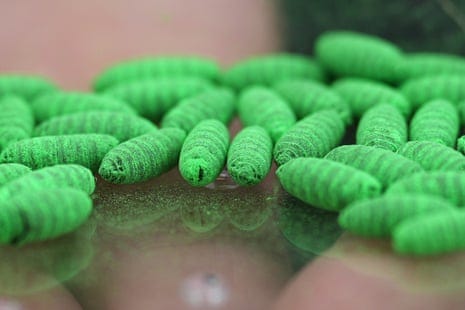
Unlike many insects that feed on dead tissue, screwworm larvae burrow directly into living flesh. Once inside an open wound, they feed aggressively on healthy tissue, causing severe injuries, infections, suffering, and in some cases death. The damage can escalate rapidly.
Animals that initially appear healthy can develop enlarging wounds, significant discomfort, and severe tissue destruction within a relatively short period of time. The outbreak has now reached multiple counties across Texas, including Edwards, Tom Green, Gillespie, La Salle, Zavala, and Sutton counties.
Officials have also confirmed cases in Lea County, New Mexico, signaling that the parasite is no longer confined to a single region. Each new case raises fresh questions about how far the infestation may already have spread before detection. That uncertainty is one reason why officials are urging livestock owners to remain vigilant.
Federal agriculture authorities are asking ranchers, veterinarians, and animal owners to watch closely for warning signs including unusual wounds, maggots, egg masses, lesions around sensitive areas, and unexplained behavioral changes in animals. Early detection is critical.
The faster infected animals can be identified and treated, the better the chances of preventing additional flies from reproducing and spreading the infestation. The timing of the outbreak could hardly be worse. Beef prices are already near record highs, placing additional pressure on consumers struggling with inflation and rising food costs.
A larger screwworm outbreak could further disrupt livestock production and increase operating expenses throughout the agricultural sector. That possibility has triggered growing concern among state officials. Texas Agriculture Commissioner Sid Miller has issued some of the strongest warnings so far, arguing that every day of delay gives the parasite another opportunity to establish itself and expand its reach.
His message has been blunt. This is not a problem that can be ignored in hopes that it simply disappears. Miller is calling for broader deployment of a specialized control program known as the Screwworm Adult Suppression System. The system uses targeted bait technologies designed to eliminate fertile adult flies before they can reproduce and create new generations of parasites.
Yet that is only one part of the strategy. Historically, the most successful weapon against screwworm outbreaks has involved releasing millions of sterile flies into affected regions. These sterile flies mate with wild populations, preventing reproduction and gradually collapsing the infestation over time.
It is a remarkable example of biological warfare against a biological threat. Federal officials have already begun implementing that approach. Agriculture Secretary Brooke Rollins recently announced that millions of sterile flies have been released both by air and on the ground in an effort to create a protective barrier around affected areas.
The scale of the response reflects the seriousness of the threat. Officials understand that containment becomes significantly more difficult once the parasite establishes itself across wider geographic regions. The concern is no longer limited to Texas and New Mexico. Pennsylvania has already taken precautionary action despite having no confirmed infections.
State officials there have imposed tighter restrictions on livestock imports from affected areas and strengthened health documentation requirements. That decision reflects growing anxiety about interstate spread. Agricultural leaders know that once livestock movements begin carrying infections into new territories, containment costs rise dramatically. For now, federal officials continue to stress that the nation’s food supply remains safe.
The screwworm does not infest meat products sold to consumers, nor does it affect fruits, vegetables, or other agricultural goods. That reassurance is important. The threat is aimed at living animals rather than food products themselves. Still, food prices and livestock production remain vulnerable if the outbreak continues expanding.
The economic effects of animal disease outbreaks often extend far beyond the initial infections. What makes this outbreak particularly unsettling is that it represents the return of a problem many believed had been permanently solved. Entire generations of ranchers have operated without ever encountering screwworm infestations firsthand.
That success may have created a false sense of security. The parasite’s return serves as a reminder that victories over biological threats often require constant vigilance rather than permanent celebration. Nature has a way of exploiting complacency. For now, the outbreak remains relatively limited.
Twelve cases are not yet a national catastrophe. But history shows that agricultural threats become far more expensive and difficult to control when early warning signs are ignored. The coming weeks will reveal whether aggressive containment efforts can once again push the screwworm back into history. If those efforts succeed, this outbreak may become a cautionary tale.
If they fail, America’s livestock industry could find itself confronting one of its most feared enemies all over again.
✍️
Tiny wings, enormous cost,
Old victories suddenly lost.
A threat once buried in history’s page,
Returns again to center stage.Ignore the warning, pay the price.
Nature rarely asks us twice.
When pests advance and leaders wait,
Problems grow beyond the gate.One wound becomes ten.
Ten become a hundred.
The cost is counted not in flies,
But in livelihoods plundered.
🧭 A Small Bite to Carry
Twelve screwworm cases have now been confirmed in Texas and New Mexico, affecting cattle, goats, sheep, and a dog.
The flesh-eating parasite attacks living tissue and poses a serious threat to livestock health and the cattle industry.
Federal and state officials are deploying sterile flies and strengthening containment efforts to prevent a wider outbreak across the country.
US Stocks
Semiconductors slump, dragging down stocks
A slide in chip stocks dragged down the S&P 500 and Nasdaq 100. The Russell 2000 also dropped. Oil prices continued to slide on optimism that a peace deal will allow more crude to return to global markets.
Information technology was today’s worst performer, and the only sector to underperform the S&P 500, while financials fared the best.
ModernaMRNA $55.54 (6.29%) was one of the best performers in the S&P 500 after announcing organizational changes in preparation for potential product launches in 2027 and 2028.
Yum! BrandsYUM $157.50 (1.97%) edged up after selling its Pizza Hut chain to private equity firm LongRange Capital for $2.7 billion.
What Else Are We Biting
Lionsgate closes higher on Netflix acquisition rumor.
Oil tumbles below $80 to 3-month low on US-Iran deal.
ChatGPT’s market share slips below 50% for first time.
Biting Fact Of The Day
Nvidia will raise at least $20 billion in its first bond sale since 2021.

Agricultural experts are increasingly alarmed. Texas sits at the center of America’s cattle industry, and any widespread outbreak has the potential to create serious economic consequences that extend well beyond ranchers and farmers. The parasite itself is particularly disturbing.