

Inside Epstein’s Money Trail
A seven-hour Capitol Hill deposition exposes the financial web surrounding Jeffrey Epstein—and raises more questions than answers.

Small Bites is a reader-supported publication. To receive new posts and support my work, consider becoming a paid subscriber.
Hey Small Biters,
Seven hours behind closed doors.
That is how long Jeffrey Epstein’s longtime accountant sat before congressional investigators on Capitol Hill.
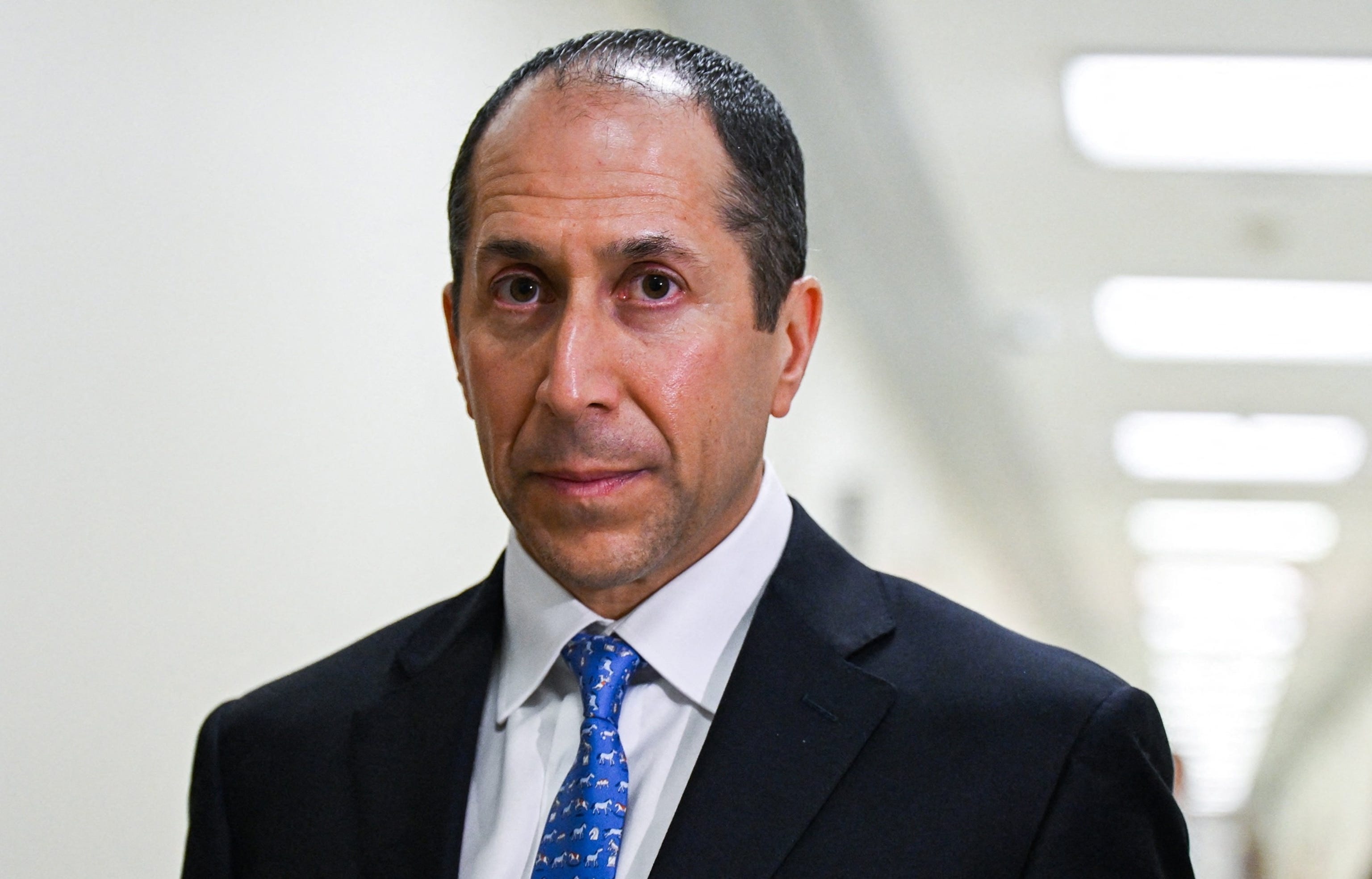
Richard Kahn, who managed the convicted sex offender’s finances for years and now serves as a co-executor of his estate, became the latest figure pulled into the expanding House Oversight Committee investigation into Epstein’s money, power and influence.
Lawmakers wanted answers.
How Epstein made his fortune.
Where that money flowed.
And whether any of it fueled the criminal enterprise that exploited and trafficked young women.
Kahn’s answer was simple.
He said he knew nothing.
“I never observed any sexual abuse or trafficking,” he told lawmakers in prepared remarks.
His relationship with Epstein, he insisted, was “strictly on a professional level.”
Kahn told investigators he never attended Epstein’s social gatherings.
He never interacted with him socially.
And he never received complaints from victims or anyone else regarding abuse.
Had he known about such crimes, he said, he would have immediately ended the professional relationship.
“I would have quit work immediately,” he stated.
The claim is central to his defense.
For years, Kahn served as the financial architect of Epstein’s vast network of accounts, trusts and shell companies.
If Epstein’s crimes depended on money, investigators believe that trail inevitably passed through Kahn’s office.
Yet the accountant told Congress he saw no warning signs.
He said Epstein’s spending was tracked “meticulously.”
Gifts to women and men existed, he acknowledged.
But he described them as a small fraction of Epstein’s total financial activity.
In his view, those payments were not red flags.
They were simply part of the billionaire financier’s lifestyle.
Kahn also rejected accusations that he helped design Epstein’s corporate structure to hide criminal activity.
He said he played no role in creating Epstein’s companies.
Nor did he consider the network suspicious.
But the numbers behind that network are staggering.
Committee investigators have spent months combing through Epstein’s financial empire.
So far, they have reviewed more than 44,000 financial documents.
Those records reveal a sprawling maze of at least 64 trusts and entities tied to Epstein.
Money flowed constantly between them.
Sometimes it moved into investments.
Sometimes to universities.
Sometimes to associates.
And sometimes in large cash withdrawals with unclear purposes.
The investigation has also turned up more than $1 billion in transactions flagged as suspicious by JPMorgan Chase between 2003 and 2019.
Those financial movements involved powerful figures on Wall Street, Epstein’s legal advisers and numerous shell companies.
Two accounts even connected to Russian banks.
Each revelation expands the scope of the investigation.
During the deposition, lawmakers pressed Kahn about Epstein’s most prominent financial clients.
According to committee chairman James Comer, Kahn identified five individuals or entities that paid Epstein the most money.
Among them were retail billionaire Les Wexner, investor Glenn Dubin, former Microsoft executive Steven Sinofsky, the Rothschild family, and private-equity titan Leon Black.
Wexner has already appeared before the committee.
Black has been asked to testify voluntarily.
Each new witness adds another layer to the story.
Lawmakers also heard testimony about potential international connections.
Democratic Representative Suhas Subramanyam said Kahn mentioned financial dealings involving former Israeli Prime Minister Ehud Barak or one of his affiliated entities.
Details remain unclear.
But investigators are now examining whether Epstein’s network extended deeper into global financial and political circles.
The deposition also touched briefly on Donald Trump.
According to committee members, Kahn said he never saw any financial transaction paid to Trump or his family.
Trump has repeatedly denied any wrongdoing related to Epstein.
Another revelation emerged involving one of Trump’s accusers.
Subramanyam said Kahn testified that the Epstein estate reached a settlement with a woman who had accused Trump.
Specific details about that agreement remain undisclosed.
For many investigators, the testimony raised as many doubts as it resolved.
Some lawmakers found Kahn’s claims of ignorance difficult to believe.
Representative James Walkinshaw openly challenged the accountant’s credibility.
He argued Epstein’s trafficking network could not have functioned without financial oversight.
And Kahn oversaw Epstein’s money for years.
“It is not credible,” Walkinshaw said, “that he had no knowledge of these crimes.”
Whether Kahn’s testimony reflects truth or careful legal distance remains uncertain.
What is clear is that the financial investigation is far from finished.
Every witness produces new leads.
Every document raises new questions.
Chairman Comer says the committee hopes to conclude its work before the end of the current Congress.
But the investigation keeps expanding.
Just last week, the committee voted to subpoena Attorney General Pam Bondi.
Lawmakers hope she will testify soon.
Because the deeper they dig into Epstein’s finances, the clearer one thing becomes.
Money is rarely simple.
Especially when it belongs to someone like Jeffrey Epstein.
And the ledger, investigators believe, still has many pages left to read.
✍️
Money moves quietly.
Power moves quietly.
Silence often follows both.Ledgers record numbers,
but they rarely record intentions.Follow the money,
and the story rarely ends where it began.
🧭 A Small Bite to Carry
Jeffrey Epstein’s longtime accountant Richard Kahn testified for seven hours before the House Oversight Committee.
Kahn insisted he had no knowledge of Epstein’s trafficking crimes and saw no suspicious financial activity.
Investigators reviewing tens of thousands of documents say Epstein’s complex financial network continues to generate new leads.
US Stocks
Stocks dip slightly, crude oil climbs amid conflict with Iran
The S&P 500 and Russell 2000 dipped, while the Nasdaq 100 just barely eked out a gain. Despite the largest-ever release of oil from strategic reserves, the price of crude oil continued to climb. Energy was the best-performing sector as oil continued to rise, while consumer staples fared the worst.
February CPI showed that headline inflation rose 0.3% month on month, in line with economists’ estimates. However, these numbers might not be of too much import right now, as the volatility in oil prices following US and Israeli strikes against Iran promises to dominate the inflation outlook in the near term.
OracleORCL $160.55 (9.18%) jumped after a Q3 earnings beat and raised guidance as its management works to alleviate fears on customer variety and balance sheet health.
NebiusNBIS $109.00 (16.13%) spiked after announcing a $2 billion investment from NvidiaNVDA $184.27 (0.67%).
UberUBER $74.41 (3.59%) moved higher after signing a multiyear deal with Amazon’sAMZN $210.87 (-0.79%) Zoox to deploy robotaxis, slated to roll out in Las Vegas in 2026 and Los Angeles in mid-2027.
Papa John’sPZZA $38.80 (19.45%) skyrocketed following a $47-per-share take-private offer from Qatari-backed Irth Capital, with support from Brookfield Asset Management.
Hims & HersHIMS $26.05 (10.27%) continued to gain after a bevy of analyst upgrades following its partnership with Novo NordiskNVO $38.52 (0.36%).
What Else Are We Biting
Group of retired senior military officers and Microsoft file briefs supporting Anthropic in lawsuit.
Lovable says it added $100M in revenue last month alone, with just 146 employees.
Zendesk acquires agentic customer service startup Forethought.
Biting Fact Of The Day
Average US gas prices exceeded $3.50 per gallon for the first time since July 2024.

Richard Kahn, who managed the convicted sex offender’s finances for years and now serves as a co-executor of his estate, became the latest figure pulled into the expanding House Oversight Committee investigation into Epstein’s money, power and influence.