

Evening Update: Trump threatens to jail the journalist who reported that a second US airman was missing after being shot down by Iran
As war intensifies, the line between national security and press freedom grows dangerously thin.

Small Bites is a reader-supported publication. To receive new posts and support my work, consider becoming a paid subscriber.
Hey Small Biters,
The war abroad is spilling into something else at home.
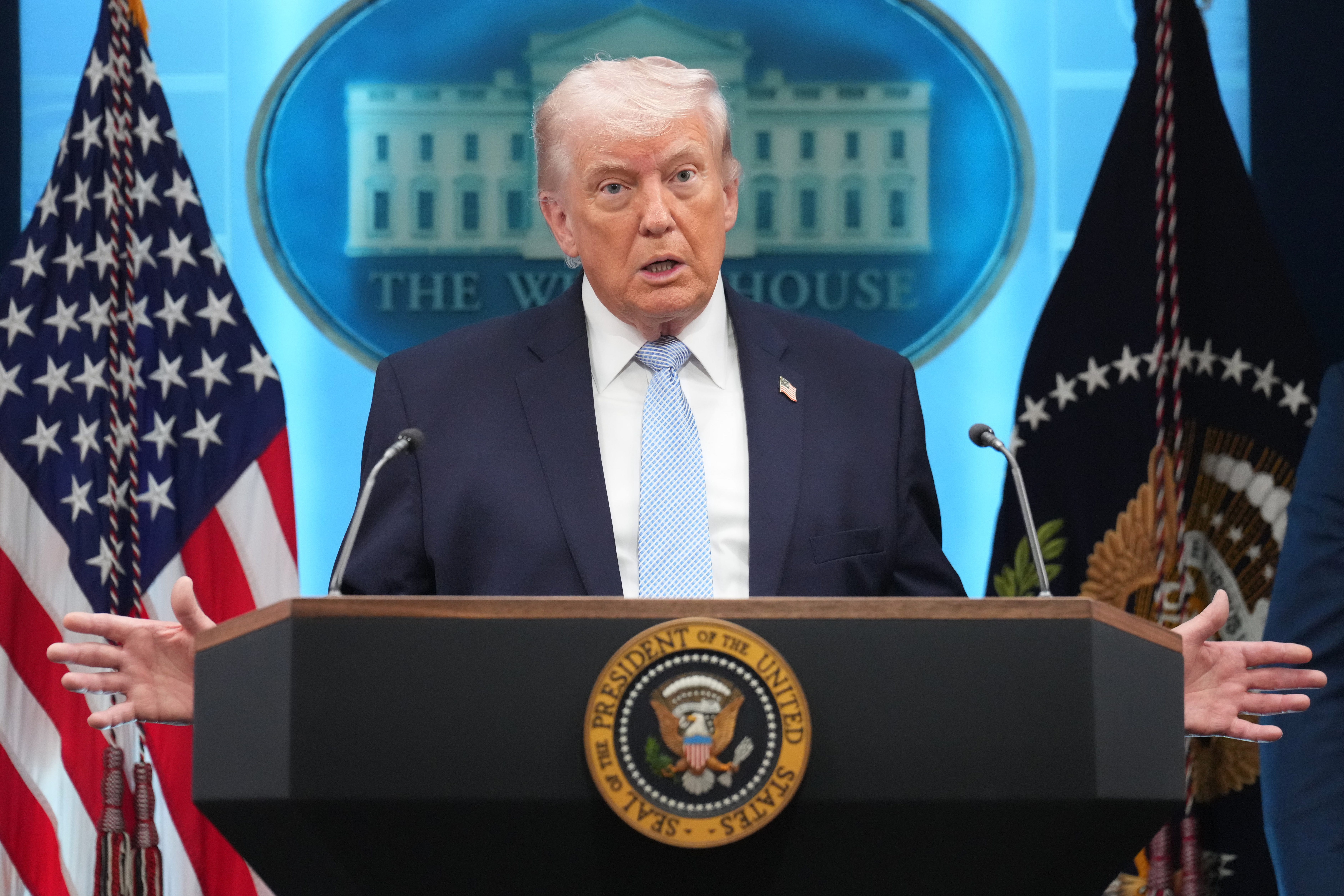
Donald Trump has escalated his confrontation not just with foreign adversaries, but with the American press—threatening to jail journalists in an effort to uncover the source of a leaked report about a missing U.S. airman. The moment is sharp, and it is revealing.
At the center of the controversy is a report that a second American airman had gone missing after being shot down by Iranian forces. According to details that later emerged, the injured service member had taken refuge in a mountain crevice, evading capture before a recovery team extracted him under fire.
The airman survived. But the story did not end there. Trump argued that the reporting itself endangered the mission, claiming it alerted Iran to the airman’s presence. His response was not limited to criticism—it was a direct threat.
He said his administration would identify the source of the leak by going after the media outlet that published it. The message was blunt: reveal the source or face jail.
Trump did not name the outlet or the journalist. He didn’t have to. The threat was broad enough to land everywhere and that breadth is what alarmed press advocates.
The United States has long maintained a tense but protected relationship between government secrecy and journalistic freedom. Leaks happen. Reporting follows. The system absorbs the friction but threats of imprisonment shift that balance.
Seth Stern of the Freedom of the Press Foundation responded directly, emphasizing that journalists are not agents of the state and are protected under the First Amendment when publishing information of public interest—even when that information is uncomfortable for those in power.
The distinction is critical. Governments are responsible for safeguarding classified information. Journalists are not responsible for protecting it. This clash did not emerge in isolation. It is part of a broader pattern.
Since returning to office, Trump has intensified his attacks on media institutions, frequently labeling unfavorable reporting as harmful or dishonest. Access has been restricted. Lawsuits have been threatened. And now, the rhetoric has escalated to potential incarceration.
Earlier this year, the tension crossed into action. A reporter from The Washington Post, Hannah Natanson, saw her home raided by the FBI in what many described as an unusually aggressive move tied to her reporting on federal oversight.
That case is still unfolding, but its shadow looms over the current moment. The message, whether intentional or not, is clear: scrutiny comes with risk. Trump frames his position through the lens of national security. In his view, the leak compromised a sensitive operation and put an American life at risk.
That argument carries weight—but it is not absolute. History has repeatedly shown that governments often invoke national security not only to protect lives, but to control narratives. The challenge is distinguishing between the two and that distinction is rarely clean.
The stakes are heightened by the context. The United States is actively engaged in a volatile conflict with Iran. Information is fluid. Decisions are immediate. The margin for error is thin. In such an environment, leaks can be dangerous but so can unchecked power.
The press operates as a counterweight—not to undermine operations, but to ensure accountability. When that role is threatened, the balance shifts. Critics argue that jailing journalists for refusing to reveal sources would mark a significant departure from established norms. It would not just target a specific report—it would send a signal to every newsroom.
Publish carefully. Or don’t publish at all. Supporters of Trump’s stance, however, see it differently. They argue that leaks during active military operations are not just irresponsible, but potentially lethal, and that stronger deterrents are necessary.
This is the tension at the heart of the moment: security versus freedom, urgency versus restraint. Neither side claims simplicity. Both claim necessity.
Meanwhile, the administration has confirmed that an investigation into the leak is underway. What remains unclear is how far that investigation will go—and whether the threats made will translate into action.
What happens next matters. Not just for one journalist, or one story, but for the framework that governs how information flows in a democracy under stress.
Because once the precedent is set, it does not stay contained and in times of war, precedents tend to expand. For now, the airman is safe. The mission is complete. But the conflict has shifted—to a different battlefield entirely.
One where the question is no longer just what happened overseas, but what is allowed to be said about it at home.
✍️
When truth becomes a target,
power starts asking questions
it was never meant to ask.Secrets belong to those who keep them.
Truth belongs to those who find it.
🧭 A Small Bite to Carry
Trump’s threat to jail journalists marks a significant escalation in tensions between the administration and the press.
The debate centers on whether national security concerns can override First Amendment protections.
The outcome could set a lasting precedent for how leaks, reporting, and accountability function during wartime.

Donald Trump has escalated his confrontation not just with foreign adversaries, but with the American press—threatening to jail journalists in an effort to uncover the source of a leaked report about a missing U.S. airman.
The type jet that was downed, was easy to identify. Iran would know its identity and, would have known what the number of crewmen were needed to operate it.
Once information was released that it was downed, how many people were missing was known.
I would suggest the pentagon itself is the leak. The release, that stated the type jet that was missing, gave up the information of how many people were missing. Saying a pilot was rescued, instead of the crew was rescued pretty much gave out the information a crew member was missing.
Even Iran knew what type jet was shot down. They knew how many crew members were missing.
No secrets were exposed.
Except the lack of knowledge that Trump and Hegseth have regarding the Air Force jet types, crew members needed, and that common knowledge is not revealing state secrets.