

Evening Update: Trump nominates Jay Clayton as top US intelligence official - From Wall Street to Spy Chief.
After backlash over a controversial interim appointment, Donald Trump turns to a former SEC chairman to lead America’s intelligence community—raising fresh questions about qualifications & experience.

Small Bites is a reader-supported publication. To receive new posts and support my work, consider becoming a paid subscriber.
Hey Small Biters,
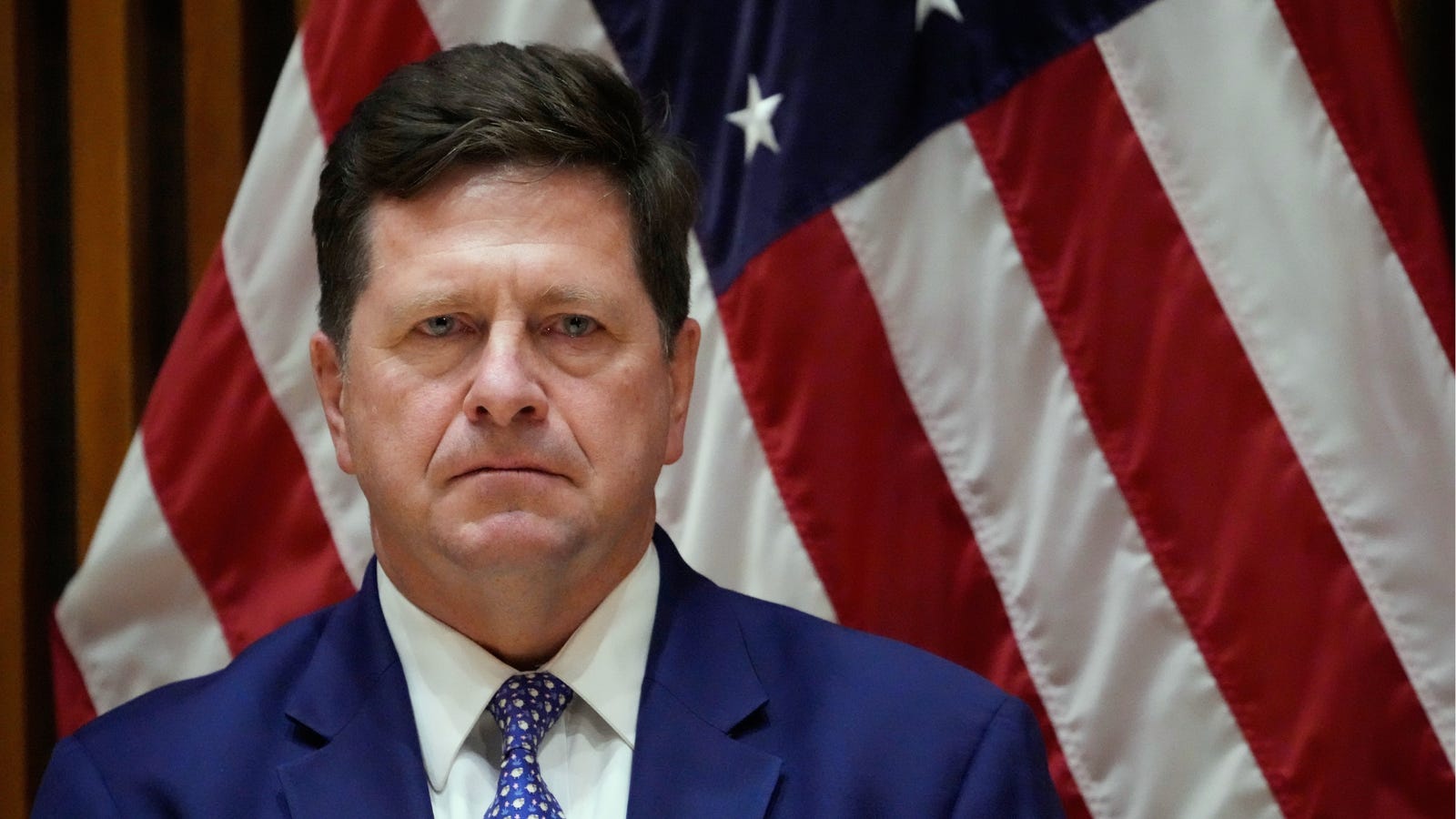
Donald Trump has made another surprising choice for one of the nation’s most sensitive national security positions. The president announced the nomination of Jay Clayton to serve as the next director of national intelligence, placing a former Wall Street lawyer and financial regulator at the helm of America’s sprawling intelligence apparatus.
The nomination arrives after weeks of criticism aimed at Trump’s decision to install Bill Pulte as acting director while searching for a permanent replacement. That temporary appointment sparked bipartisan concern. Critics argued that Pulte lacked the intelligence experience necessary to oversee agencies responsible for collecting and analyzing some of the nation’s most sensitive information.
Now Trump is attempting to move forward with a permanent nominee. Whether Clayton quiets those concerns remains an open question. At first glance, Clayton’s résumé looks impressive. He served as chairman of the Securities and Exchange Commission during Trump’s first administration and currently oversees one of the Justice Department’s most prominent federal prosecutor offices as U.S. attorney for the Southern District of New York.
Those positions placed him at the center of major financial, regulatory, and legal matters. Yet neither role provided significant operational intelligence experience. That reality is fueling a new round of questions. The Office of the Director of National Intelligence coordinates the work of eighteen separate intelligence agencies, including organizations responsible for counterterrorism, cyber threats, military intelligence, and foreign espionage.
Many national security experts traditionally expect candidates for the role to possess extensive intelligence backgrounds. Clayton does not fit that mold. Trump, however, appears unconcerned by those criticisms. In announcing the nomination, he urged the Senate to move quickly and confirm Clayton without delay.
The president’s endorsement reflects his continued preference for trusted allies over traditional national security insiders. That governing approach has defined much of Trump’s second term. Supporters argue it brings fresh perspectives. Critics argue it risks placing inexperienced figures into highly specialized positions.
Clayton’s defenders point to his history managing complex crises. During the 2008 financial meltdown, he played a significant role in several landmark rescue and acquisition deals that helped stabilize portions of the banking system.
Those transactions included the emergency sale of Bear Stearns and major financial agreements involving Goldman Sachs and other institutions. Supporters say such experience demonstrates an ability to manage high-pressure situations. They argue leadership skills can translate across different sectors.
The nomination is already drawing scrutiny over Clayton’s previous legal work. Before entering government, he represented major financial institutions involved in controversial cases. Some lawmakers are expected to revisit those episodes during the confirmation process.
One area likely to receive attention involves his work connected to foreclosure settlement negotiations following the housing crisis. Another concerns his defense of Deutsche Bank during investigations involving Russian-linked transactions. Neither issue derailed his earlier confirmations.
Both could resurface as senators examine his qualifications for a position carrying enormous national security responsibilities. The intelligence director’s office sits at the intersection of policy, security, and politics. Every decision carries consequences that reach far beyond Washington.
That reality explains why senators from both parties are approaching the nomination carefully. Interestingly, early reactions suggest Clayton may face less resistance than Pulte. Several Democrats who sharply criticized the acting appointment have offered cautious praise for the president’s decision to move in a different direction.
That does not mean confirmation will be easy. It does suggest the political atmosphere surrounding Clayton differs substantially from that surrounding Pulte. The controversy surrounding Bill Pulte continues to influence the debate. Trump installed Pulte as acting director despite significant objections from lawmakers on both sides of the aisle.
The appointment became particularly contentious because of ongoing debates surrounding surveillance powers and intelligence oversight. Many senators have insisted that any long-term legislative agreements involving intelligence authorities require clarity regarding leadership. Several lawmakers have made their position unmistakably clear. They want Pulte removed from the role entirely.
Senate Minority Leader Chuck Schumer has been among the most vocal critics. His message has been direct. America’s intelligence operations, he argues, are too important to leave in uncertain hands. Others have echoed similar concerns. The pressure appears to have influenced the White House’s decision to accelerate its search for a permanent nominee.
Meanwhile, important intelligence legislation hangs in the balance. A key surveillance authority under the Foreign Intelligence Surveillance Act faces expiration unless Congress acts. The debate over leadership arrives at precisely the moment lawmakers are deciding how much power intelligence agencies should retain.
That timing makes the nomination especially consequential. Leadership questions and surveillance debates are now becoming intertwined. Clayton’s current role as U.S. attorney offers another layer of complexity. His office handles some of the nation’s most significant criminal cases, including matters involving terrorism, public corruption, organized crime, and financial fraud.
Managing those responsibilities has given him exposure to national security issues. Whether that exposure is sufficient preparation for overseeing the entire intelligence community is likely to become a central question during confirmation hearings. The nomination also highlights a broader trend within the Trump administration.
Increasingly, the president has favored outsiders and unconventional candidates over traditional experts. That approach energizes supporters who view government institutions as overly bureaucratic and resistant to change. Critics view it as a risky experiment with critical public offices. The intelligence community may become the latest testing ground for that philosophy.
Confirmation hearings will provide senators with an opportunity to explore Clayton’s views on intelligence collection, foreign threats, surveillance authorities, and national security priorities. Lawmakers will want assurances that he can manage agencies he has never directly worked within. They will also seek clarity about his independence and decision-making.
The position requires balancing politics, intelligence assessments, and national security realities. That balance is rarely simple. For Trump, the nomination represents an attempt to stabilize a controversy that had begun creating political headaches. For Clayton, it represents the most challenging appointment of his public career.
For senators, it presents a choice between accepting a nontraditional nominee or demanding a candidate with deeper intelligence credentials. The coming weeks will reveal whether Wall Street experience and legal expertise are enough to convince Congress.
The outcome will help determine who briefs the president on threats, oversees intelligence coordination, and shapes some of the most important security decisions facing the United States. That is a responsibility far larger than politics alone.
✍️
The résumé may shine bright and bold,
Yet questions emerge when the story is told.
Experience matters where secrets reside,
And credentials alone cannot be the guide.Some leaders emerge from battlefields,
Others from boardrooms and financial fields.
The question now facing Washington’s halls,
Is whether one skillset answers all calls.In Washington, expectations can be low,
Sometimes progress is simply choosing not to go,
Further down a troubled path,
Avoiding another political aftermath.The stakes grow higher with every day,
As deadlines approach and lawmakers weigh,
Who should guide the nation’s eyes,
Through secrets hidden behind disguise.
🧭 A Small Bite to Carry
Donald Trump nominated former SEC chairman Jay Clayton to become director of national intelligence after criticism of acting director Bill Pulte.
Clayton brings legal and financial experience but lacks a traditional intelligence background, raising questions about his qualifications for the role.
The nomination comes as Congress debates surveillance authorities and lawmakers demand greater stability within America’s intelligence leadership.

Now Trump is attempting to move forward with a permanent nominee. Whether Clayton quiets those concerns remains an open question. At first glance, Clayton’s résumé looks impressive. He served as chairman of the Securities and Exchange Commission during Trump’s first administration and currently oversees one of the Justice Department’s most prominent federal prosecutor offices as U.S. attorney for the Southern District of New York.
Unfortunately, Trump won't listen to anyone who isn't a Nazi,a Racist, a Pedophile,a Warmonger,
a Fox News person etc,etc,etc. What does anyone expect from someone who may have a modicum of intelligence.