

Evening Update: Trump Made a Fool of Himself at the NATO Summit
After hours of criticism and fresh threats, the U.S. president abruptly embraced alliance unity, exposing the uncertainty that continues to shadow NATO.

Small Bites is a reader-supported publication. To receive new posts and support my work, consider becoming a paid subscriber.
By BELAY (Financial Solutions)

Are you running your business or just hoping the numbers work out?
Most small business owners have financials; few have financial clarity. There’s a big difference between books that are technically up to date and books that actually tell you what’s going on in your business right now.
When accounting is reactive, updated only when there’s time and reviewed annually during tax season, you lose visibility exactly when you need it most. You can’t tell which clients or services are truly profitable. You can’t spot a cash flow problem before it becomes a crisis. And you can’t make confident growth decisions on incomplete data.
BELAY’s outsourced accounting team changes that. We become a seamless part of your business, managing your books, tracking key metrics, and delivering timely financial reporting that lets busy leaders focus on what only they can do.
Hey Small Biters,
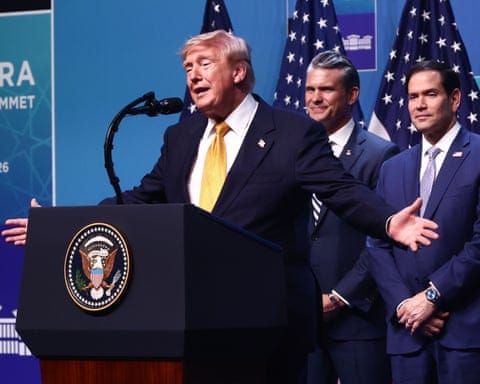
Donald Trump once again dominated a NATO summit by delivering a whirlwind of conflicting messages that left allies scrambling to interpret America’s true position. After opening with criticism, threats, and familiar grievances, he abruptly shifted course and declared that he felt “tremendous love” from fellow leaders, creating another unpredictable chapter in the alliance’s history.
The two-day summit in Ankara had been expected to focus on strengthening NATO, increasing defense cooperation, and coordinating long-term security plans. Instead, much of the attention centered on Trump’s remarks, personality, and rapidly changing tone toward America’s closest allies.
European leaders arrived at the summit hoping to avoid another public confrontation with Trump after months of diplomatic strain. They were determined to present a united front, especially as Russia’s war against Ukraine and instability in the Middle East continue to test the alliance.
Those hopes appeared to unravel almost immediately. Trump opened the day by renewing his criticism of NATO members, accusing them of failing to contribute enough to collective defense while suggesting they had not adequately supported the United States during military operations involving Iran.
The president also revived his controversial demand that the United States should control Greenland. The proposal, previously rejected by both Denmark and Greenland, resurfaced as Trump argued the Arctic territory holds enormous strategic value because of increased Russian and Chinese activity.
His comments triggered immediate pushback. Danish officials reiterated that Greenland is not for sale and emphasized that its future belongs to its people and the Kingdom of Denmark, not to foreign governments seeking greater geopolitical influence.
Trump also questioned America’s long-term military commitment to Europe. He argued that Washington continues to shoulder an unfair share of NATO’s defense burden while European governments spend too little on their own security.
Defense spending remained one of his central complaints throughout the summit. Trump insisted that the United States has carried NATO financially for decades while many allies continue falling short of agreed military investment targets.
Spain received particularly sharp criticism after refusing to fully embrace NATO’s goal of spending 3.5 percent of GDP on defense by 2035. Trump even suggested trade consequences could follow, signaling his willingness to mix economic pressure with security disputes.
The United Kingdom also found itself in Trump’s crosshairs. He criticized British hesitation over allowing U.S. forces to conduct military operations connected to the conflict with Iran, reviving frustrations he has expressed repeatedly over recent months.
His rhetoric extended beyond America’s allies. Trump referred to Iran’s leadership in deeply insulting terms while declaring that he had little interest in continuing discussions with Tehran following the fragile ceasefire negotiated only weeks earlier.
Yet only hours later, the atmosphere shifted dramatically. During a private meeting with NATO’s 32 leaders, Trump reportedly struck a much more conciliatory tone, emphasizing unity rather than division.
Following that meeting, Trump declared there had been “a lot of love” in the room and praised the spirit of cooperation among alliance members. He stated that the United States wanted to remain fully engaged with its NATO partners.
One of the summit’s biggest surprises came during Trump’s meeting with Ukrainian President Volodymyr Zelenskyy. Trump reportedly offered to license the production of Patriot air defense missile systems in Ukraine, a move that could significantly strengthen the country’s defensive capabilities.
NATO leaders welcomed another important development when all member nations reaffirmed their commitment to Article 5, the alliance’s collective defense clause declaring that an attack against one member constitutes an attack against all.
For many European governments, Trump’s public endorsement of Article 5 represented perhaps the summit’s greatest achievement. Questions about America’s commitment to collective defense have lingered throughout much of his presidency, making the reaffirmation particularly significant.
Still, uncertainty remained impossible to ignore. No date was announced for the alliance’s next leaders’ summit, fueling speculation that future gatherings may become less frequent amid ongoing political tensions inside NATO.
Behind the scenes, alliance officials reportedly worked carefully to manage Trump’s mood throughout the summit. NATO Secretary General Mark Rutte frequently praised the president’s role in encouraging higher defense spending, using diplomacy and flattery to keep discussions focused on cooperation rather than confrontation.
The summit ultimately showcased both NATO’s resilience and its ongoing challenges. Leaders succeeded in presenting a united declaration while announcing billions of dollars in new defense initiatives, yet the event also underscored how quickly political uncertainty can overshadow strategic progress. For allies seeking stability, the strongest message may not have been Trump’s words of unity, but the reminder that unpredictability itself has become one of NATO’s greatest strategic challenges.
✍️
Storms may shake the harbor,
Yet ships still seek the shore.
Strong alliances survive,
Not because the winds are gentle,
But because they refuse to drift apart.
🧭 A Small Bite to Carry
President Trump alternated between criticizing NATO allies and later praising alliance unity, leaving leaders relieved but cautious about America’s long-term commitment.
The summit concluded with a renewed endorsement of NATO’s Article 5 collective defense pledge and announcements of major new defense initiatives.
Despite moments of reconciliation, disputes over defense spending, Greenland, Iran, and America’s role in Europe continue to test the alliance’s cohesion.

European leaders arrived at the summit hoping to avoid another public confrontation with Trump after months of diplomatic strain. They were determined to present a united front, especially as Russia’s war against Ukraine and instability in the Middle East continue to test the alliance.
Honestly, you could’ve stopped at, “made a fool of himself.” Not sure the context even matters at this point.