

Evening Update: The U.S. is deploying over 5,000 Marines and three warships
The United States sends thousands of Marines and warships toward the Middle East, signaling the Iran conflict may be far from over.

Small Bites is a reader-supported publication. To receive new posts and support my work, consider becoming a paid subscriber.
Hey Small Biters,
The war with Iran is widening.
Despite early claims that the operation would be swift and decisive, the United States is now deploying thousands of additional Marines and multiple warships toward the Middle East.
The move signals a simple reality.
This war may last longer than originally promised.
And the possibility of American troops fighting on the ground is no longer hypothetical.
Defense Secretary Pete Hegseth approved the new deployment after a request from U.S. Central Command.
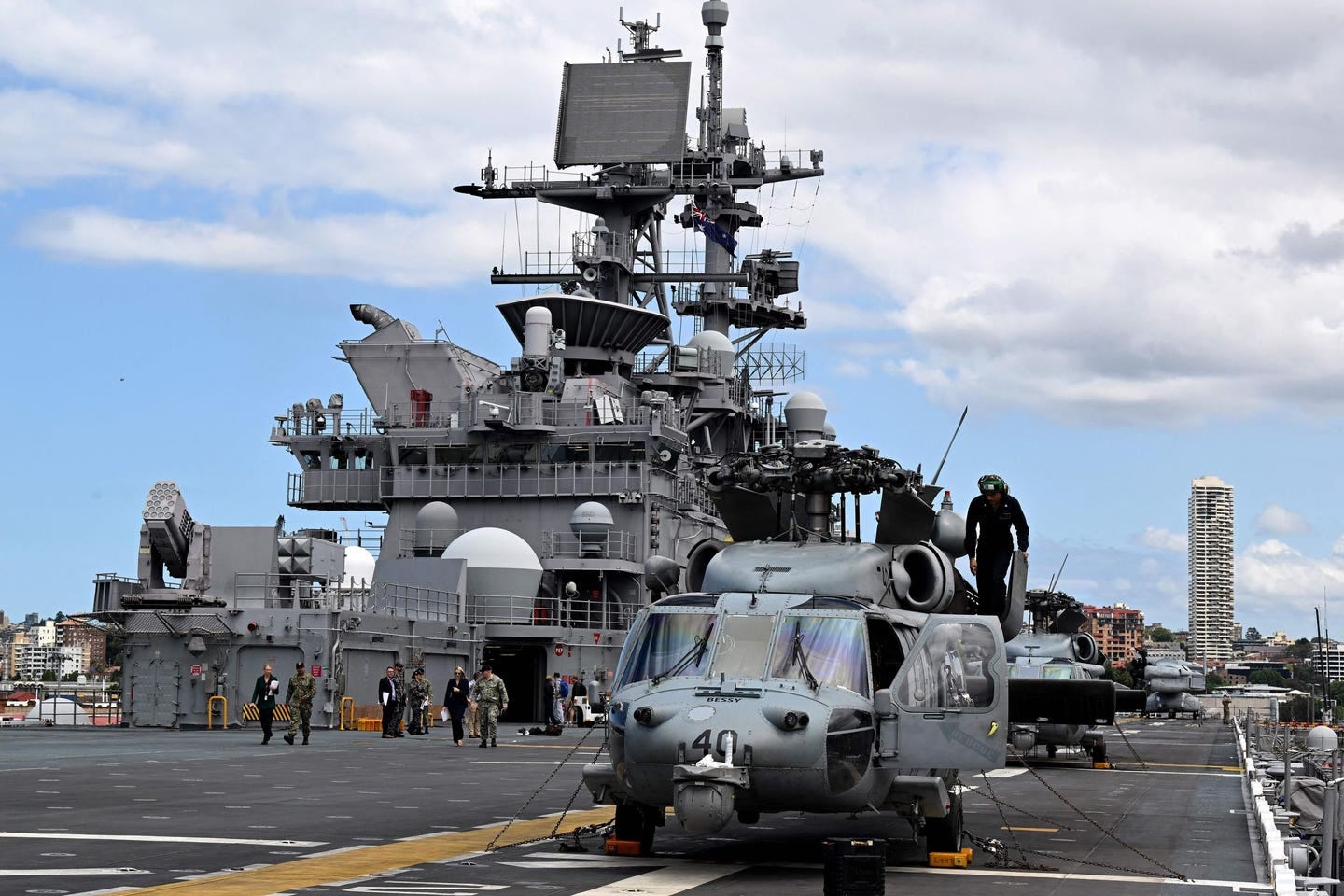
The assets include a portion of an amphibious ready group along with a Marine expeditionary unit — a powerful combination designed for rapid military escalation.
Such groups typically include several warships and thousands of Marines and sailors.
Reports indicate that roughly 5,000 Marines are being deployed aboard three Navy amphibious ships.
The force comes primarily from the 31st Marine Expeditionary Unit, based in Okinawa, Japan.
The unit is one of the U.S. military’s most flexible and rapidly deployable forces.
It is designed to move quickly.
Strike quickly.
And adapt quickly.
Within the group are advanced aircraft and equipment capable of expanding the conflict dramatically.
F-35B Lightning II stealth fighters travel with the unit.
So do MV-22B Osprey aircraft — tilt-rotor machines capable of carrying troops and supplies deep into combat zones.
The Ospreys are especially important.
They allow rapid troop insertions, battlefield resupply, and amphibious assaults.
The deployment does not automatically mean ground combat.
But it creates the option.
And options are what military planners prepare for when a conflict begins to expand.
Once the Marines arrive, commanders could rapidly launch ground operations if the White House authorizes them.
That possibility is already being discussed in Washington.
Some lawmakers say the trajectory of the war is becoming clear.
Senator Richard Blumenthal warned this week that the United States appears to be moving toward a scenario where American troops may be needed to achieve the mission’s objectives.
In other words, escalation may be inevitable. Donald Trump has not ruled out the possibility.
While speaking about the war earlier this week, he said he would know the operation was finished “when I can feel it in my bones.”
The comment, meant to project confidence, has instead raised concern among critics who say military strategy should rely on planning rather than instinct.
The timeline of the deployment also carries meaning.
The USS Tripoli, one of the ships expected to participate in the mission, could take roughly two weeks to reach the Middle East.
That travel time alone suggests the conflict may extend into April.
That would be weeks longer than early White House statements implied.
When the war began, Trump said the campaign might last four to five weeks.
Some officials initially described the strikes as nearly complete.
But the movement of additional forces tells a different story.
Military conflicts often follow a familiar pattern.
First come the airstrikes.
Then the reinforcements.
Then the uncertainty.
The human cost of the war is already rising.
Just under two weeks into the conflict, 13 U.S. service members have been killed.
Those deaths include six airmen who died when a military refueling aircraft crashed in western Iraq.
The Pentagon said the crash was not caused by enemy fire.
But a pro-Iranian militia group quickly claimed responsibility.
Whether the claim is true or propaganda remains unclear.
Either way, the war is already producing casualties.
And the number could climb if ground combat begins.
Iran, for its part, has signaled it is prepared for a prolonged fight.
Iranian leaders have warned that the country will not surrender quickly and that American forces across the region remain potential targets.
If the conflict stretches into months instead of weeks, the stakes could expand dramatically.
Oil markets are already shaking.
Shipping routes through the Strait of Hormuz remain unstable.
Global energy prices are climbing.
And the geopolitical consequences are spreading far beyond the battlefield.
For now, the United States continues to move ships, aircraft and troops into position.
Each new deployment adds another layer of pressure.
Another layer of uncertainty.
And another reminder that wars rarely stay within their original boundaries.
What began as targeted strikes is now becoming something larger.
More ships.
More troops.
More questions about how — and when — the war will end.
✍️
War begins with airstrikes.
But history shows it rarely ends there.Wars measured by instinct
rarely end where leaders expect.When wars widen,
the shockwaves travel farther than the missiles.
🧭 A Small Bite to Carry
The U.S. is deploying over 5,000 Marines and three warships to the Middle East as the Iran conflict intensifies.
The forces include the 31st Marine Expeditionary Unit, equipped with F-35B jets and Osprey aircraft capable of launching ground operations.
The deployment suggests the war may last longer than initially expected and could potentially expand to include American troops on the ground.

Despite early claims that the operation would be swift and decisive, the United States is now deploying thousands of additional Marines and multiple warships toward the Middle East.