

Evening Update: South Carolina Republicans Just Told Trump “No” — Again.
A dramatic rebellion inside the South Carolina GOP halted an aggressive redistricting push backed by Donald Trump and exposed growing cracks inside Republican power politics.

Small Bites is a reader-supported publication. To receive new posts and support my work, consider becoming a paid subscriber.
Hey Small Biters,
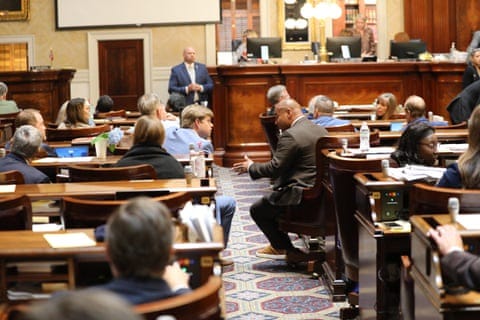
Donald Trump does not hear “no” from Republicans very often anymore. That is exactly why what happened in South Carolina this week matters so much. Republican lawmakers in the state senate openly defied the former president and blocked a rushed redistricting plan designed to weaken Democratic voting power ahead of the midterm elections. In a stunning 26-18 vote, fourteen Republican senators joined Democrats to kill the proposal despite intense pressure from Trump and national Republican operatives.
The rebellion landed like a thunderclap inside Washington. Because this was not merely a procedural disagreement. It was an open refusal to obey. At the center of the fight stood Jim Clyburn, the longtime Democratic congressman whose district Republicans hoped to dismantle through aggressive redistricting.
The plan aimed to split apart large concentrations of Democratic voters and significantly reduce Black voting influence in Clyburn’s district. Republicans believed reshaping the map could help them secure nearly all seven congressional seats in South Carolina heading into the 2026 midterms.
The strategy reflected a much broader national campaign now unfolding across Republican-controlled states. After recent Supreme Court decisions weakened portions of the Voting Rights Act, Republican lawmakers across the country moved rapidly to redraw congressional maps in their favor before November elections.
South Carolina became one of the most aggressive fronts in that battle. Then the revolt began. Trump personally lobbied South Carolina lawmakers repeatedly. He reportedly made multiple calls to Republican state senate majority leader Shane Massey and even addressed Republican senators privately by phone earlier this month. Trump also amplified pressure publicly through social media posts demanding action.
Normally, that level of presidential intervention ends the conversation immediately inside today’s Republican Party. This time it did not. Several Republican senators openly criticized both the substance of the proposal and the chaotic process surrounding it.
One of the sharpest objections came from Republican state senator Tom Davis, who blasted outside consultants from Washington for parachuting into the state and demanding lawmakers approve a map with almost no review. “Nineteen days ago, a map was generated by a consultant from Washington DC,” Davis said angrily during debate.
Then came the line that captured the absurdity perfectly. The consultant reportedly spoke to lawmakers over Zoom for only seven minutes and forty seconds before leaving without answering questions. Seven minutes. To redraw democracy.
That detail enraged several senators who believed national Republican strategists were treating South Carolina like a chessboard rather than a functioning state with ongoing elections already underway. Early voting had already begun when the redistricting push intensified.
Thousands of South Carolinians were literally casting ballots while lawmakers debated whether to erase the election itself and redraw the districts midstream. That timing proved too extreme even for some conservative Republicans. Republican senator Richard Cash summarized the concern bluntly.
“Neither my conscience or common sense is going to let me stop an election that is already under way,” he said. That sentence exposed something larger happening beneath the surface. Not every Republican is fully comfortable with how aggressively electoral systems are now being manipulated for partisan gain.
The push for rapid redistricting reflects growing Republican anxiety nationally despite the party’s current House majority. Trump allies increasingly believe aggressive map manipulation may be necessary to preserve control of Congress as economic frustrations, war tensions, and political exhaustion intensify heading into the midterms.
The strategy is brutally straightforward: Redraw districts. Dilute opposition voters. Maximize structural advantages before public opinion shifts further. Democrats have engaged in their own redistricting battles elsewhere, particularly in states like California and Illinois. Still, the South Carolina fight carried special symbolic weight because it directly targeted one of the most prominent Black Democrats in Congress.
Clyburn responded defiantly. Standing in Orangeburg after casting one of the first early ballots, he declared he would run regardless of how Republicans attempted to reshape the district. “I’m OK if it’s Trump plus 20,” he said. That confidence irritated Republicans even further.
The failed redistricting push also revealed something increasingly uncomfortable for Trump’s movement: Control is not always absolute. Republican lawmakers may fear Trump politically, but some still resist when they believe the pressure becomes reckless, rushed, or legally dangerous. Shane Massey’s comments reflected that tension clearly.
“There are likely consequences for me personally,” he admitted while defending his resistance. That statement sounded almost like someone preparing for retaliation. Inside today’s Republican Party, crossing Trump publicly often carries career risks immediately. Primary threats. Donor backlash. Social media attacks. Political exile.
Massey acknowledged all of it openly. Then voted against the plan anyway. The larger national context makes the South Carolina vote even more important. Republicans across multiple states are scrambling to redraw maps after the Supreme Court weakened protections that historically limited racial gerrymandering. The legal environment shifted dramatically, opening opportunities many conservative strategists immediately rushed to exploit.
The urgency now feels almost panicked. Republicans clearly believe time may not remain on their side politically. That fear explains why some lawmakers wanted to halt elections already underway. The midterms loom over everything. Control of the House may depend on only a handful of districts nationwide. Every seat matters. Every map matters. Every line matters.
Democrats seized immediately on the South Carolina rebellion as evidence that even some Republicans recognize the dangers of extreme gerrymandering. Voting-rights groups described the failed proposal as an attempt to rig elections openly before voters could respond.
Republicans counter that redistricting has always been political and that Democrats routinely engage in the same behavior when given power. Both statements contain truth. Still, what made this episode extraordinary was not merely the map itself. It was the speed. The pressure. The outside interference.
The willingness to potentially void elections already in progress. That combination alarmed even members of Trump’s own party. The collapse of the redistricting drive also demonstrated the growing tension between national political operatives and local state lawmakers.
Washington strategists increasingly treat states as tactical pieces inside broader power struggles. Local legislators often face the consequences directly — lawsuits, voter anger, procedural chaos, and public distrust.
South Carolina Republicans ultimately decided the political cost outweighed the gain. At least for now. That “for now” matters enormously. The broader redistricting war is far from over. Florida, Texas, Louisiana, North Carolina, and several other states continue exploring aggressive electoral changes ahead of the midterms.
Both parties understand the stakes clearly. Modern American politics increasingly revolves less around persuasion and more around structural advantage. That reality keeps intensifying. The South Carolina vote may not stop future redistricting efforts nationally. It does reveal something important about the current political moment.
Even inside Trump’s Republican Party, there are still occasional limits. Not many. Not often. But enough to remind Washington that fear and loyalty are not always the same thing.
For one dramatic afternoon in Columbia, South Carolina, Republican senators looked at pressure from the most powerful figure in their party and decided the process had gone too far.
In modern American politics, that alone qualifies as shocking.
✍️
The orders came from far away,
from power rooms where strategists stay,
yet somewhere deep in southern halls,
a different voice ignored the calls.The maps were drawn with careful hands,
to stretch and split political lands,
where every line becomes a blade,
through which democracy is remade.The consultant clicked the screen,
through graphs and numbers cold and clean,
then vanished back to distant halls,
while states were told obey the calls.The voters stood already near,
with ballots cast through hope and fear,
while lawmakers debated still,
whether elections bend to will.
🧭 A Small Bite to Carry
South Carolina Republicans defied Donald Trump and blocked a rushed congressional redistricting plan designed to weaken Democratic voting power ahead of the midterms.
Fourteen Republican senators joined Democrats to reject the proposal, criticizing both the rushed process and attempts to alter elections already underway.
The failed effort exposed growing tensions inside the GOP over aggressive gerrymandering, political pressure from Trump, and fears surrounding the 2026 midterm elections.

The plan aimed to split apart large concentrations of Democratic voters and significantly reduce Black voting influence in Clyburn’s district. Republicans believed reshaping the map could help them secure nearly all seven congressional seats in South Carolina heading into the 2026 midterms.
One Word......YEA!!