

Evening Update: Bill Gates Faces Epstein Questions Under Oath.
The Microsoft co-founder tells lawmakers he never witnessed criminal behavior, while admitting his association with Jeffrey Epstein was a serious mistake that he deeply regrets.

Small Bites is a reader-supported publication. To receive new posts and support my work, consider becoming a paid subscriber.
Hey Small Biters,
Jeffrey Epstein may be dead, but the questions surrounding his network of powerful connections continue to ripple through American politics, business, and public life. This week, one of the world’s most recognizable billionaires found himself answering those questions directly before Congress.
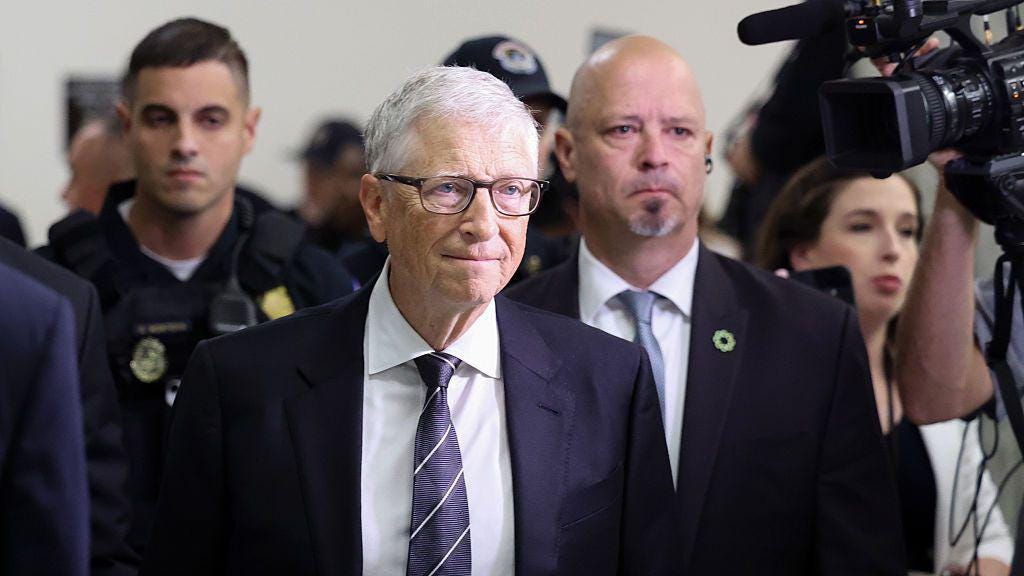
Bill Gates appeared in a closed-door session before the House Oversight Committee as lawmakers continue examining the relationships Epstein cultivated with influential figures long after his criminal convictions became public knowledge. The Microsoft co-founder entered the hearing determined to draw a clear line between himself and Epstein’s crimes.
In his opening statement, Gates flatly declared that he had never victimized anyone and had never witnessed Epstein engaging in criminal conduct during their interactions. His testimony represents one of the highest-profile appearances yet in Congress’s expanding effort to understand how Epstein maintained relationships with wealthy and influential individuals despite his troubling past.
At the center of the questioning is a reality Gates himself openly acknowledged. He chose to associate with Epstein after Epstein had already been convicted as a sex offender. That fact has remained a source of criticism for years. Gates told lawmakers that he was introduced to Epstein in 2011 through people involved in professional and philanthropic circles.
According to Gates, Epstein presented himself as someone capable of helping raise billions of dollars for global health initiatives and charitable causes. The promise of major philanthropic support caught Gates’s attention. Looking back, he admitted that he failed to exercise the level of scrutiny such an introduction required.
He acknowledged knowing that Epstein had faced legal troubles in the past, but said he did not fully understand the scope and severity of Epstein’s crimes. That explanation has become a central part of Gates’s defense. He insists that his interest was focused on philanthropy rather than friendship. The meetings, he said, centered largely on discussions involving charitable giving structures and potential donors.
Gates described a series of preliminary meetings during 2011 and 2012 before conversations became more extensive in 2013 and 2014. The billionaire testified that Epstein repeatedly claimed he could connect him with individuals willing to contribute substantial resources to global health programs. For Gates, those promises eventually proved empty.
According to his testimony, Gates eventually concluded that Epstein could not deliver what he promised. The group of potential donors Epstein assembled never produced meaningful financial support. By late 2014, Gates said he decided to end all contact. He told lawmakers that he informed Epstein there would be no further collaboration and ceased communications entirely.
Yet the story did not end there. One of the most sensitive portions of Gates’s testimony involved allegations that Epstein later attempted to leverage personal information about him. Gates said Epstein became aware of details regarding his extramarital affairs and attempted to use that information to pressure him into re-engaging.
The billionaire described those efforts as manipulative and unsuccessful. He maintained that his personal mistakes had nothing to do with Epstein but acknowledged the pain they caused his family. His testimony portrayed Epstein not as a philanthropist but as a skilled manipulator who used access, information, and influence to maintain relationships with powerful individuals.
That characterization mirrors descriptions offered by numerous people who encountered Epstein over the years. Many have argued that his greatest asset was his ability to create an image of legitimacy. Gates repeatedly returned to a theme of regret. He told lawmakers that he should never have met Epstein in the first place.
Even if the promised philanthropic funding had materialized, Gates argued, it would not have justified maintaining the relationship. That admission may be one of the most important takeaways from the testimony. Rather than defending the association, Gates openly described it as a failure of judgment. Congressional investigators appeared focused on understanding why so many influential figures overlooked Epstein’s criminal record.
Lawmakers repeatedly pressed Gates on the fact that the relationship began after Epstein had already been convicted. That timeline remains difficult for many observers to ignore. Questions about accountability become more complicated when warning signs already existed.
Representative Robert Garcia later told reporters that Gates had been cooperative throughout the interview. Garcia also noted that Gates had provided information about other individuals connected to Epstein’s orbit. The committee has not yet released a full transcript of the testimony.
Additional details are expected to emerge once the record becomes public. The hearing comes amid renewed national attention on Epstein following the release of millions of pages of records earlier this year. Those files included references to Gates, photographs, and documentation of meetings that reignited public scrutiny.
Importantly, Gates has never been accused of criminal wrongdoing related to Epstein. No evidence has emerged suggesting Gates participated in or had knowledge of Epstein’s criminal conduct. Even so, the relationship continues to generate public interest because of what it reveals about Epstein’s access to elite circles.
The Gates Foundation has also faced questions regarding interactions between some staff members and Epstein. Foundation officials have consistently maintained that no partnership was ever formed and no philanthropic fund was created through Epstein’s efforts. The organization has launched an external review examining its past interactions and vetting procedures.
That review remains ongoing. The controversy has become a cautionary tale for institutions that depend on wealthy donors and influential intermediaries. Good intentions do not eliminate the need for careful judgment. Reputation can be damaged not only by wrongdoing, but by proximity to those who commit it.
For Gates, that lesson appears painfully clear. He told lawmakers that Epstein sought legitimacy by surrounding himself with respected individuals. Looking back, Gates believes he became part of that effort without fully recognizing it. The hearing ultimately served two purposes.
For lawmakers, it was another step in unraveling how Epstein maintained influence despite being a convicted sex offender. For Gates, it was an opportunity to publicly explain decisions that have followed him for more than a decade. Whether those explanations satisfy critics remains uncertain. The questions surrounding Epstein continue to reach boardrooms, government offices, universities, charities, and political institutions.
What remains clear is that the scandal’s reach extends far beyond one man. Every new testimony adds another piece to a puzzle that America is still trying to fully understand.
✍️
Some doors open dressed as opportunity,
While hiding shadows behind prosperity.
The lesson arrives long after the choice,
When regret becomes the loudest voice.Promises glitter like polished gold,
Until the truth begins to unfold.
Some roads seem noble at the start,
Yet lead to places that test the heart.He built his empire not with trust,
But with secrets, power, and borrowed lust.
The wealthy came, the famous stayed,
While questions lingered and judgments delayed.The questions remain though years have passed,
Because some shadows are built to last.
Every answer opens another door,
Leaving investigators asking for more.
🧭 A Small Bite to Carry
Bill Gates told congressional investigators he never witnessed criminal behavior by Jeffrey Epstein and never participated in any wrongdoing.
Gates admitted his association with Epstein was a serious mistake and said he should never have met with the convicted sex offender.
Lawmakers continue investigating Epstein’s network of influential connections as new records and testimony keep drawing public attention.

According to Gates, Epstein presented himself as someone capable of helping raise billions of dollars for global health initiatives and charitable causes. The promise of major philanthropic support caught Gates’s attention. Looking back, he admitted that he failed to exercise the level of scrutiny such an introduction required.
Surprise, surprise, surprise. Do you believe him? Not according to some survivors, he knew what was going on, and he participated in it. Where did he get the STD he had to get antibiotics to give his wife?