

Daily Bulletin...
Trump Cancels Planned Iran Strikes Citing Negotiation Progress.

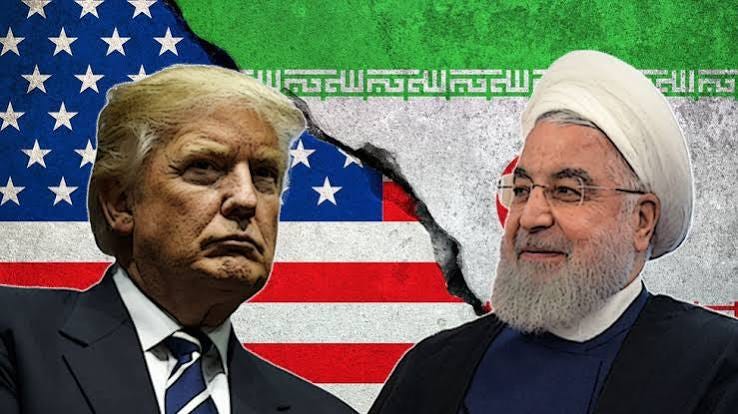
The United States and Iran approach a final text to wind down their military conflict, though official confirmation remains fluid. Tensions have peaked after months of back-and-forth strikes, with regional mediators actively facilitating the diplomatic text. Despite assertions from Washington that a settlement is near, officials in Tehran maintain that a final decision has not been formalized, emphasizing that the situation remains subject to document finalization over the coming days.
A federal judge extends a court order indefinitely blocking the implementation of a $1.8 billion anti-weaponization fund. U.S. District Judge Leonie Brinkema ruled that the administration failed to provide absolute legal certainty regarding the fund’s operation. The fund, designed by the White House to compensate individuals who claimed to be victims of past government weaponization, faces continuous pushback over the legality of diverting federal funds for such payouts.
The Trump administration pushes Congress to pass a resolution aimed at symbolically expunging his first-term impeachments. White House officials confirmed active discussions with congressional allies to advance a resolution that would formally voice disapproval of the previous impeachment findings. Legal experts note that while such a resolution would be historically unprecedented and politically symbolic, it carries no binding constitutional or judicial mechanism to alter the historical record.
The U.S. Justice Department sues the state of Virginia over a newly implemented state ban on face masks. The federal lawsuit claims that Virginia’s sweeping mask ban unconstitutionally attempts to regulate and interfere with federal law enforcement agents. Federal prosecutors argue that the state legislation fails to provide necessary exemptions for federal officers who require masks for health, safety, or undercover operational procedures.
A U.S. appeals court rules to extend a temporary block on a lower-court order, keeping global tariffs active. The decision preserves the administration’s 10% global tariff under Section 122 of the Trade Act for the vast majority of international trade. The legal fight continues to escalate as multi-national importers argue the executive branch overstepped its statutory authority by enacting broad economic protections without explicit congressional approval.
The United States outlines a significant military drawdown of assets and personnel previously dedicated to NATO operations. Internal administration documents reveal plans to cut roughly one-third of American fighter jets, maritime reconnaissance aircraft, and aerial refueling tankers in Europe. The aggressive scaling back marks a dramatic shift in eight decades of transatlantic security policy, drawing sharp concern from European allies ahead of next week’s G7 summit.
The FBI executes a federal search warrant on the offices of an Ohio-based non-profit group supporting voter registration. Federal agents seized computer servers and documents during the raid, though the agency declined to comment on the specific nature of the ongoing investigation. Voting rights advocacy groups slammed the move as political intimidation, while state election officials stressed the need to investigate compliance with registration protocols.
Veterans and legal advocacy groups launch a federal lawsuit to halt the construction of a massive commemorative arch near Arlington National Cemetery. The lawsuit claims the rapid, round-the-clock construction schedule will create severe environmental damage and disrupt the solemnity of the burial grounds. White House planners defend the monument as a necessary tribute to American history, despite complaints from surrounding municipalities regarding long-term traffic and zoning violations.
Donald Trump nominates U.S. Attorney Jay Clayton as the Director of National Intelligence following intense bipartisan pushback. The nomination came swiftly after lawmakers strongly resisted the temporary appointment of a loyalist with no intelligence background. While Capitol Hill has generally received Clayton’s nomination with relief, lawmakers continue to examine his previous record as head of the Securities and Exchange Commission and his oversight of high-profile federal cases.
A critical U.S. foreign surveillance program under Section 702 of the Foreign Intelligence Surveillance Act officially expires. The domestic spying powers went dark after a short-term extension collapsed in the House, with a coalition of Democrats and libertarian-leaning Republicans voting down the measure. Intelligence officials warned that the expiration risks creating gaps in national security, while opponents celebrated the block as a defense against potential surveillance weaponization.