

A Ceasefire, Not a Solution
A fragile U.S.-Iran agreement exposes the limits of war, pressure, and political promises.

Small Bites is a reader-supported publication. To receive new posts and support my work, consider becoming a paid subscriber.
Hey Small Biters,
For all the talk of military victory, regime collapse, and overwhelming pressure, the latest agreement between the United States and Iran reveals a far less dramatic reality. After months of war, threats, sanctions, and escalating rhetoric, Washington is once again turning to diplomacy.
The announcement was presented by Donald Trump as a major breakthrough. The president declared that an agreement had effectively been reached and suggested that peace was finally within sight. Yet beneath the triumphant language lies a more complicated truth.
What has emerged is not a comprehensive peace treaty. It is not a final settlement. It is not even a fully developed nuclear agreement. Instead, it is a memorandum of understanding designed to buy time.
The proposed arrangement would extend the fragile ceasefire between the United States and Iran while reopening the Strait of Hormuz, one of the world’s most important shipping routes. The goal is to create breathing room for future negotiations rather than resolve the deeper disputes that fueled the conflict.
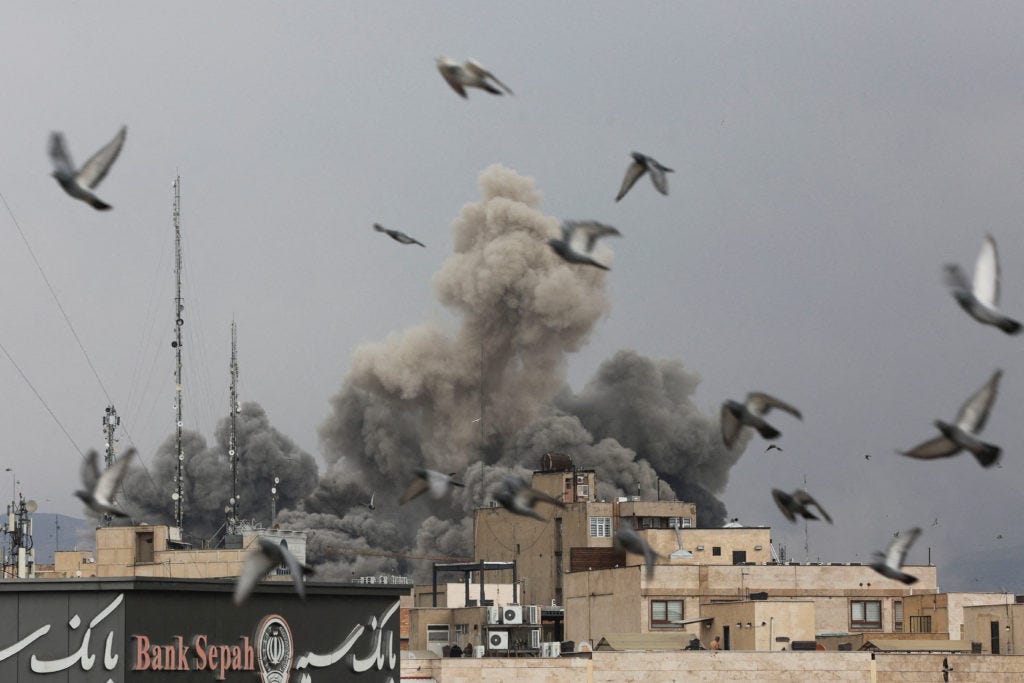
That distinction matters. For months, the administration argued that military pressure and economic punishment would force Iran into making major concessions. The new framework suggests those goals remain largely unresolved. The war inflicted significant damage on Iran.
Military facilities were hit. Senior officials were killed. Economic pressure intensified. Oil revenues suffered. Yet despite those setbacks, Iran’s government remains standing and negotiating from a position that still gives it leverage. One of the clearest examples is the Strait of Hormuz itself.
When the conflict began, the waterway remained open. Iran later closed it in response to military attacks, creating economic disruption that rattled global energy markets and drove up costs worldwide. Now reopening that same route has become a centerpiece of the negotiations.
The agreement highlights a difficult reality facing Washington. Military force can damage infrastructure. It can weaken armies. It can pressure governments. What it often cannot do is create a stable political outcome. The administration now appears to be acknowledging that fact. Despite thousands of military strikes and months of economic pressure, the United States still finds itself sitting across the negotiating table from the same regime it hoped to transform.
That reality has frustrated many foreign policy hawks. Some argue that the administration is settling too quickly. Others insist that Iran remains vulnerable and that further pressure could eventually force a more decisive outcome. Those voices have grown increasingly vocal as details of the memorandum emerge. Critics fear that Washington may end up providing sanctions relief or releasing frozen Iranian assets without obtaining significant concessions in return.
Supporters of the agreement see things differently. They argue that avoiding a wider regional war is itself a major achievement. Every day without missiles, drone attacks, or disruptions to global energy supplies carries enormous economic and humanitarian value. The challenge is that neither side fully trusts the other. Iran remembers previous agreements that later unraveled.
American officials remain skeptical of Tehran’s intentions. That mutual distrust hangs over every paragraph of the proposed framework. One of the largest unresolved issues remains Iran’s nuclear program. American negotiators reportedly want strict limits on uranium enrichment, monitoring systems, and clear commitments regarding nuclear development.
Iran appears more interested in postponing those discussions until later rounds of negotiations. That gap has not disappeared. It has merely been delayed. The political challenge facing Trump is equally significant. Throughout his political career, he has criticized previous administrations for negotiating with Tehran. Many of his supporters embraced promises of strength, pressure, and tougher terms.
Now his administration is pursuing another diplomatic arrangement that may look surprisingly familiar to earlier efforts. That creates a difficult balancing act. The president must convince supporters that diplomacy represents victory rather than retreat. His critics are already questioning whether the administration achieved enough to justify the costs of war.
Congress is expected to play a central role in that debate. Several lawmakers have demanded full transparency regarding the memorandum’s contents. They argue that Americans deserve to know exactly what commitments have been made and what concessions are being offered. Those demands are coming from both sides of the political aisle.
The skepticism extends beyond Washington. Inside Iran, hardliners are also questioning the agreement. Many believe Tehran gave up valuable leverage by reopening the Strait of Hormuz without securing stronger guarantees of long-term economic relief. The debate inside Iran mirrors the debate inside America.
Each side fears it may be conceding too much. Each side worries the other cannot be trusted. Each side claims the agreement may ultimately benefit its opponent more than itself. Regional tensions further complicate matters. Even as negotiators move toward an agreement, military actions continue elsewhere.
Strikes in Lebanon and clashes involving regional proxy groups remind everyone how fragile the situation remains. A ceasefire on paper does not automatically create peace on the ground. The broader Middle East remains a landscape filled with competing interests, old grievances, and unresolved conflicts.
That means implementation may prove far harder than negotiation. The success of this arrangement depends not only on Washington and Tehran but also on actors throughout the region. For now, the agreement represents an admission that neither military action nor economic pressure delivered a decisive solution. After months of conflict, both sides appear to have arrived at the same conclusion.
Diplomacy remains imperfect. It remains frustrating. It remains politically risky. Yet it may still be the only option available. The coming weeks will reveal whether this memorandum becomes the foundation for a lasting agreement or simply another temporary pause in a conflict that neither side has truly resolved.
History offers plenty of examples of ceasefires that collapsed. It also offers examples of fragile understandings that eventually evolved into durable peace. No one knows which path lies ahead.
What is clear is that after all the threats, bombings, sanctions, and declarations of imminent victory, the United States and Iran have arrived exactly where many expected they eventually would.
Back at the negotiating table.
✍️
The guns grew loud, the markets shook,
The world held its breath with every look.
Yet after the smoke and thunder passed,
The diplomats returned at last.Trust is scarce where wars begin,
Suspicion lingers beneath the skin.
Peace may arrive with cautious grace,
But doubt still occupies its place.Victory speeches fill the air,
Yet neither side seems fully there.
When both camps question what was won,
The hardest work has just begun.
🧭 A Small Bite to Carry
The new U.S.-Iran memorandum is not a final peace deal but a temporary framework designed to extend the ceasefire and reopen the Strait of Hormuz.
Despite months of military action and economic pressure, neither side achieved a decisive victory, forcing a return to diplomacy.
Major disputes involving Iran’s nuclear program, sanctions relief, and regional security remain unresolved and could determine whether the agreement survives.
US Stocks
Stocks climb on US-Iran peace deal
The S&P 500, Nasdaq 100, and Russell 2000 climbed higher on news that the US and Iran have reached a deal to reopen the Strait of Hormuz and end hostilities. Oil prices sank on the news.
Technology was the best-performing sector as the peace deal reignited enthusiasm for the AI trade, while energy was the worst performer. All Magnificent 7 stocks rose.
BitcoinBTC $66,336.81 (0.65%) rose to its highest level in two weeks as the risk-on mood resumed. EthereumETH $1,794.81 (4.35%), solanaSOL $74.18 (4.17%), XRPXRP $1.23 (3.83%), ZcashZEC $513.22 (5.60%), and Hyperliquid StrategiesPURR $9.24 (7.30%) also soared as the broader crypto market snapped back on improved risk sentiment.
The peace deal reignited the momentum trade, sending 2026’s best-performing tech and semiconductor names sharply higher.
FoxFOX $49.97 (-15.22%) sank as as investors digested the risk profile and timeline of its deal to buy RokuROKU $141.30 (-1.93%) in a cash-and-stock transaction valued at about $22 billion.
What Else Are We Biting
DOJ approved the Paramount-Warner Bros. deal even as investigators were leaning toward suing to stop it.
Britain announces social media ban for under-16s starting early 2027.
Nvidia to reportedly raise at least $20 billion in first bond sale since 2021.
Biting Fact Of The Day
EVs may soon take 80% of China’s new car market.

The proposed arrangement would extend the fragile ceasefire between the United States and Iran while reopening the Strait of Hormuz, one of the world’s most important shipping routes. The goal is to create breathing room for future negotiations rather than resolve the deeper disputes that fueled the conflict.
What has emerged is not a comprehensive peace treaty. It is not a final settlement. It is not even a fully developed nuclear agreement. Instead, it is a memorandum of understanding designed to buy time.
Its actually a ploy to give the Trumps of the world to find more ways to enrich themselves while trying to make themselves look/feel better.
WHY HASN'T ANYONE FIGURED THIS OUT???????????????